§ 00Services

Twelve practices, arranged in the order they are usually needed.

We do not offer everything to everyone. The catalogue below reflects the work we take on and the depth we bring to it.

01

Service 1 of 12

Custom software development

Bespoke applications engineered to match the specific way a business operates, rather than adapting the business to a generic product.

Typical use

Organisations whose core workflow is not served well by off‑the‑shelf software, or whose competitive edge lives in a process worth encoding.

Main capabilities

  • ·Domain modelling and technical discovery
  • ·Backend services and APIs
  • ·Web front‑end interfaces
  • ·Data models and reporting
  • ·Long‑term maintenance and evolution

Practical value

A working system that reflects the actual business, is legible to future maintainers, and can be extended without rewrites.
02

Service 2 of 12

Web application development

Browser-based systems for customers, staff or partners — from customer portals to internal operations tools.

Typical use

Teams that need a shared interface accessible from any device, or a customer-facing product that must run reliably at web scale.

Main capabilities

  • ·Interactive front-end interfaces
  • ·Authentication and role-based access
  • ·Responsive design across devices
  • ·Search, filtering and reporting views
  • ·Integration with existing systems

Practical value

A durable web application that is measured, monitored and maintained after launch, not left to drift.

03

Service 3 of 12

Business automation

Replace recurring manual tasks — data entry, reconciliation, notifications, approvals — with reliable, observable processes.

Typical use

Operations, finance and back‑office teams spending hours on repeatable tasks that a well-defined process could handle instead.

Main capabilities

  • ·Workflow design and mapping
  • ·Scheduled and event-driven jobs
  • ·System-to-system integrations
  • ·Approval routing and audit trails
  • ·Exception handling and alerts

Practical value

Reclaimed time for people, fewer clerical errors, and an audit trail that shows exactly what happened and when.

04

Service 4 of 12

IT consulting

Independent advice on architecture, tooling and technology decisions, grounded in engineering practice rather than sales.

Typical use

Leadership teams evaluating a new platform, weighing a build‑versus‑buy decision, or trying to understand the state of an existing estate.

Main capabilities

  • ·Technical audits of existing systems
  • ·Architecture reviews and recommendations
  • ·Vendor and platform evaluation
  • ·Modernisation roadmaps
  • ·Second-opinion engagements

Practical value

Written analysis and recommendations that a business can use to decide, budget and plan with confidence.

05

Service 5 of 12

Cloud solutions

Design, provision and operation of cloud environments sized to the workload — not to a supplier's growth chart.

Typical use

Businesses moving off legacy hosting, launching a new platform, or trying to control cloud costs that have crept upward.

Main capabilities

  • ·Infrastructure as code
  • ·Environment provisioning and hardening
  • ·Cost review and rightsizing
  • ·Backup and disaster recovery design
  • ·Ongoing platform operations

Practical value

An environment that is understood, documented, cost-appropriate, and recoverable when something goes wrong.

06

Service 6 of 12

Data management

Turn scattered records across spreadsheets and systems into a coherent, queryable source of information.

Typical use

Teams whose reporting is manual, whose numbers rarely agree between systems, or whose analytical work is limited by data access.

Main capabilities

  • ·Data modelling and warehouse design
  • ·ETL and integration pipelines
  • ·Data quality checks and validation
  • ·Reporting and dashboard delivery
  • ·Retention and archival policies

Practical value

Reliable, well-defined data that leadership can act on — and that engineers can extend without breaking existing reports.

07

Service 7 of 12

System integration

Make the tools a business already pays for talk to each other cleanly, safely and in a way that can be observed.

Typical use

Companies with a working stack of SaaS and internal tools where information does not flow between them without human effort.

Main capabilities

  • ·API integration and connectors
  • ·Event- and queue-based messaging
  • ·Data transformation and mapping
  • ·Error handling and retries
  • ·Monitoring of integration health

Practical value

Systems that work together as a set rather than as a collection — with clear visibility when something breaks.

08

Service 8 of 12

Cybersecurity consulting

Assessments, hardening and governance work aligned with recognised security frameworks and the specifics of a business.

Typical use

Organisations preparing for a security review, responding to elevated risk, or wanting an honest picture of their exposure.

Main capabilities

  • ·Risk assessments and threat modelling
  • ·Access, identity and secrets reviews
  • ·Dependency and patching hygiene
  • ·Policy and process documentation
  • ·Incident response preparation

Practical value

A clear, prioritised view of security posture — and a realistic plan for improving it.

09

Service 9 of 12

Technical support

Ongoing support for the software and infrastructure we build, and for selected systems built by others.

Typical use

Businesses that need dependable maintenance, bug fixes and incident response after a system is in production.

Main capabilities

  • ·Bug triage and resolution
  • ·Monitoring and alert response
  • ·Minor enhancements and adjustments
  • ·Version and dependency updates
  • ·Documented change management

Practical value

Someone accountable for the system continuing to work — not an inbox that goes unread.

10

Service 10 of 12

Digital transformation

Programmes that gradually replace ageing systems and manual practices with dependable digital equivalents.

Typical use

Organisations that recognise a broader shift is needed, but want it delivered as a sequence of tractable projects rather than a single upheaval.

Main capabilities

  • ·Current-state assessment
  • ·Sequenced modernisation plan
  • ·Pilot delivery and measurement
  • ·Change management support
  • ·Iterative rollout

Practical value

Measurable progress made in phases, with each phase producing usable outcomes and clear learning.

11

Service 11 of 12

UI/UX design

Interface design for the applications we build — focused on legibility, workflow fit and reduction of unnecessary decisions.

Typical use

Products whose users work under pressure, whose interfaces are used daily, or where a poor interface has become a business risk.

Main capabilities

  • ·Interaction and information design
  • ·Interface prototypes and reviews
  • ·Accessibility considerations
  • ·Design systems for consistency
  • ·Usability adjustments post-launch

Practical value

Interfaces that respect their users' time and reduce the training required to operate them well.

12

Service 12 of 12

Software maintenance

Sustained care of software after launch: keeping it secure, current and aligned with the business as it changes.

Typical use

Any system that must remain in service for years — where neglect quietly compounds into risk and cost.

Main capabilities

  • ·Scheduled dependency updates
  • ·Security patching
  • ·Performance monitoring
  • ·Small feature additions
  • ·Documentation kept in sync

Practical value

Software that stays trustworthy over time rather than degrading between major projects.

§ Note on outcomes

We describe what we do, not what we promise.

Results in software are shaped by circumstances that neither party fully controls — existing systems, priorities, data quality, timelines. Rather than promising outcomes we cannot guarantee, we describe the work we do and the practices we bring to it, and agree measurable expectations at the start of each engagement.

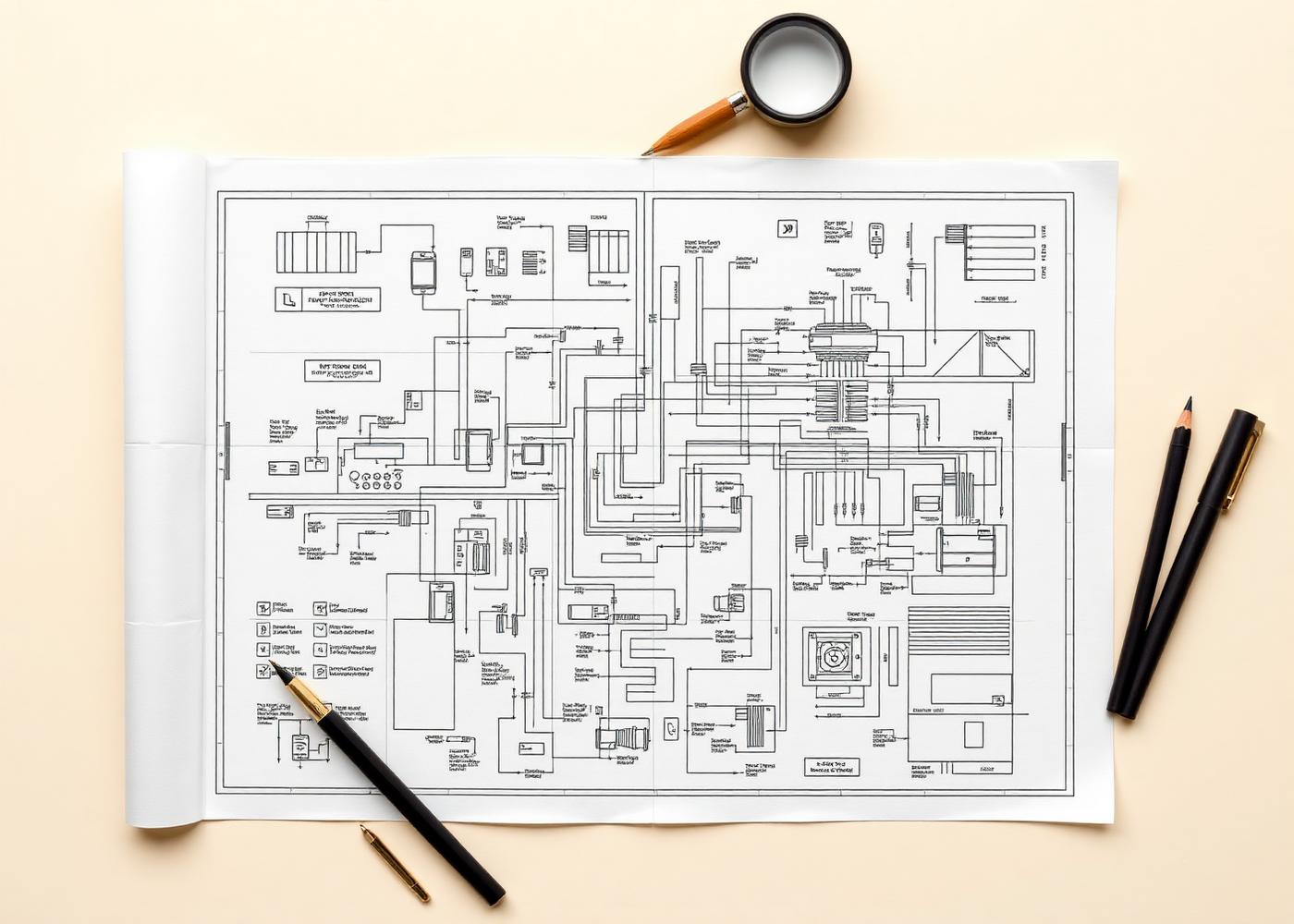
Technical blueprint of a system drawn on grid paper